



 Artificial Intelligence
 Augmented & Virtual Reality
 Internet of Things
 Custom Software Development
 ERP Development
 Mobile Application Development
 Web Application Development
 Web Designing
 E-Commerce

How Artificial Intelligence Is Shaping the Future of Businesses in Dubai, UAE
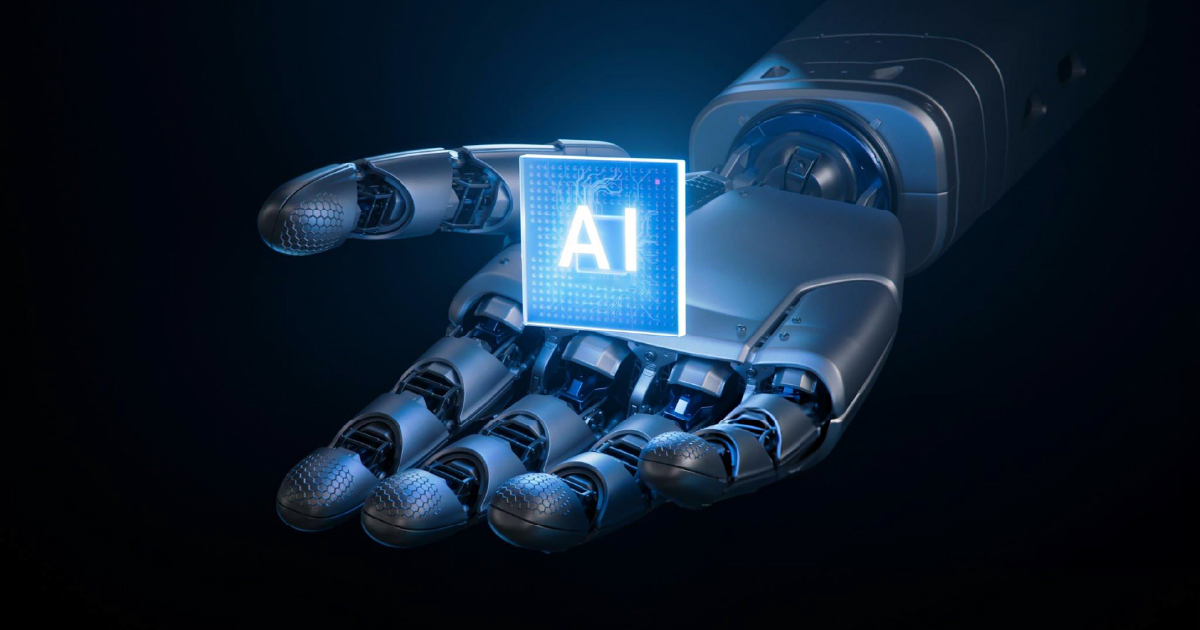
Artificial Intelligence (AI) is rapidly transforming the business landscape in Dubai and across the UAE. What was once considered an emerging technology is now becoming an important part of business strategy, digital transformation, customer experience, and operational efficiency.
```Businesses across industries are using AI to automate repetitive processes, analyze large volumes of data, understand customer behavior, improve decision-making, and create new digital experiences. From AI-powered chatbots and predictive analytics to computer vision, generative AI, and intelligent automation, organizations are exploring new ways to apply artificial intelligence to real-world business challenges.
Dubai's technology-focused business environment and strong emphasis on innovation have created significant opportunities for organizations looking to adopt AI. As AI technology continues to evolve, businesses that develop a clear AI strategy can improve efficiency, create competitive advantages, and discover new opportunities for digital growth.
What Is Artificial Intelligence?
Artificial Intelligence refers to technologies that enable software and computer systems to perform tasks that traditionally require human intelligence. These capabilities can include learning from data, recognizing patterns, understanding language, interpreting images, making predictions, and supporting decisions.
Modern AI solutions can combine machine learning, natural language processing, computer vision, deep learning, generative AI, and automation technologies to solve specific business problems.
For businesses, the value of AI is not simply in using advanced technology. The real opportunity comes from applying AI where it can produce measurable improvements in productivity, customer experience, operational efficiency, revenue, or decision-making.
UAE's Vision for AI-Driven Growth
The UAE has established a strong strategic focus on artificial intelligence and emerging technologies. AI is being explored across government services, smart infrastructure, healthcare, transportation, finance, education, energy, and business operations.
This technology-driven environment is encouraging businesses in Dubai to evaluate how AI can be incorporated into their products, services, and internal processes.
For organizations, this creates an opportunity to move beyond basic digital transformation and develop intelligent systems that can learn from data, automate workflows, and support faster decision-making.
Key AI Trends Emerging in Dubai and the UAE
1. AI-Powered Business Automation
AI-powered automation is one of the most practical applications of artificial intelligence for businesses. Organizations can use AI to automate repetitive and time-consuming tasks while allowing employees to focus on more strategic activities.
AI automation can be applied to customer support, document processing, data entry, invoice processing, lead qualification, reporting, employee workflows, and other operational processes.
Unlike traditional rule-based automation, AI-powered systems can analyze information and adapt their actions based on the context and data available.
- Automated document processing
- Intelligent workflow automation
- Lead qualification
- Customer service automation
- Invoice and data processing
- Automated reporting
2. Generative AI for Business
Generative AI has become one of the most significant developments in the artificial intelligence landscape. These systems can generate text, images, code, summaries, recommendations, and other forms of content based on user instructions and available information.
Businesses in Dubai can use generative AI to support marketing, customer service, software development, internal knowledge management, content creation, research, and business communication.
When integrated securely into enterprise systems, generative AI can also help employees access relevant business information and complete tasks more efficiently.
3. Agentic AI and Intelligent AI Agents
AI is increasingly moving beyond systems that simply respond to individual prompts. AI agents can be designed to understand objectives, evaluate information, use connected tools, and complete multi-step tasks with limited human intervention.
For businesses, agentic AI can support workflows such as lead management, customer service, research, reporting, scheduling, data analysis, and operational coordination.
AI agents can also interact with existing business applications through APIs, creating opportunities for more intelligent enterprise automation.
4. Predictive Analytics and Smart Decision-Making
Businesses generate large amounts of data through websites, applications, transactions, customer interactions, IoT devices, and enterprise systems. AI and machine learning can analyze this data to identify patterns and generate useful predictions.
Predictive analytics can help businesses forecast demand, identify customer trends, detect potential risks, optimize inventory, estimate future performance, and support data-driven decisions.
Instead of relying entirely on historical reports, organizations can use AI-powered analytics to gain a more forward-looking view of their business.
5. AI Chatbots and Virtual Assistants
Customer expectations for fast and continuous support are increasing. AI-powered chatbots and virtual assistants enable businesses to provide customer assistance around the clock.
Modern AI chatbots can understand natural language, answer frequently asked questions, retrieve information from knowledge bases, assist with product discovery, qualify leads, and route complex requests to human employees.
When integrated with CRM, ERP, e-commerce, or customer service platforms, AI assistants can provide more personalized and context-aware interactions.
6. Computer Vision and Image Recognition
Computer vision enables AI systems to analyze and interpret visual information from images and video. This technology is being applied across industries where visual monitoring, inspection, identification, or analysis is required.
Retail businesses can use computer vision for store analytics and inventory monitoring, while manufacturers can use it for quality inspection. Real estate, healthcare, logistics, and security applications can also benefit from image recognition and video analytics.
- Quality inspection
- Object detection
- Image classification
- Video analytics
- Visual monitoring
- Automated inspection
7. AI, Cloud Computing, and IoT Integration
The combination of AI, cloud computing, and the Internet of Things is creating increasingly intelligent digital ecosystems. IoT devices can collect real-time information from machines, vehicles, buildings, and other physical environments, while AI can analyze that data and identify meaningful patterns.
This combination can support predictive maintenance, energy optimization, smart buildings, fleet management, industrial monitoring, and intelligent automation.
Cloud platforms provide the infrastructure required to store, process, and analyze large volumes of data while making AI capabilities accessible across different business applications.
8. AI-Powered Personalization
Customers increasingly expect businesses to provide experiences that are relevant to their interests and needs. AI can analyze customer behavior, preferences, browsing activity, purchase history, and interactions to deliver more personalized experiences.
E-commerce businesses can use AI for product recommendations, personalized offers, intelligent search, customer segmentation, and abandoned-cart strategies.
Personalization can help businesses improve engagement and create more relevant customer journeys across websites, applications, and digital channels.
9. AI-Powered Cybersecurity
As businesses become increasingly digital, cybersecurity has become an essential consideration. AI can support security teams by analyzing large volumes of network and system activity and identifying unusual patterns.
AI-powered security systems can assist with anomaly detection, threat monitoring, suspicious activity identification, and automated alerts.
Although AI can strengthen cybersecurity operations, businesses still require comprehensive security strategies involving access controls, encryption, monitoring, secure development practices, and human oversight.
10. AI-Powered Software Development
Artificial intelligence is also changing the way software applications are designed and developed. AI-assisted development tools can help developers generate code, identify potential issues, create documentation, write tests, and accelerate development workflows.
For businesses, AI can help development teams reduce repetitive work and focus more on architecture, product functionality, security, and user experience.
Industries Benefiting From AI in Dubai and the UAE
AI can be applied across almost every industry, but certain sectors are particularly well positioned to benefit from intelligent technologies.
Retail and E-commerce
AI can help retailers analyze customer behavior, personalize product recommendations, optimize inventory, automate customer support, and improve marketing performance.
Healthcare and Medical Technology
AI can support medical data analysis, patient monitoring, administrative automation, medical imaging analysis, and personalized healthcare applications when implemented within appropriate clinical and regulatory frameworks.
Banking and Financial Services
Financial organizations can use AI for fraud detection, risk analysis, customer service, document processing, financial forecasting, and intelligent automation.
Real Estate and Construction
AI can support property recommendations, market analysis, predictive maintenance, computer vision, construction monitoring, document processing, and customer engagement.
Manufacturing
Manufacturers can combine AI with Industrial IoT to monitor equipment, predict maintenance requirements, optimize production, improve quality control, and reduce operational downtime.
Logistics and Transportation
AI can analyze transportation data to support route optimization, demand forecasting, fleet management, delivery planning, and operational efficiency.
Benefits of AI Development for Businesses
Implementing AI strategically can provide businesses with benefits that extend beyond automation. When AI solutions are aligned with clear business objectives, they can create measurable improvements across different areas of an organization.
- Higher operational efficiency: Automate repetitive processes and reduce manual effort.
- Faster decision-making: Analyze large volumes of information and identify relevant insights.
- Better customer experiences: Deliver faster, more personalized interactions.
- Improved forecasting: Use historical and real-time data to identify potential trends.
- Reduced operational costs: Optimize workflows and resource utilization.
- Scalable operations: Automate processes that would otherwise require additional manual resources.
- New business opportunities: Develop AI-powered products, services, and digital experiences.
Challenges Businesses Should Consider Before Adopting AI
While AI offers significant opportunities, successful implementation requires careful planning. Businesses should first identify the specific problem they want AI to solve rather than adopting AI simply because it is a popular technology.
Data quality is another important consideration. AI systems depend on reliable and relevant data to produce useful results. Organizations should evaluate their data sources, infrastructure, privacy requirements, and security practices before deploying AI solutions.
Businesses should also consider model accuracy, integration complexity, ongoing maintenance, employee adoption, governance, and human oversight when planning an AI implementation.
How to Start an AI Development Project
A successful AI project generally begins with a clear understanding of the business problem. Organizations should identify processes where AI can create measurable value and then determine the appropriate technology and implementation approach.
- Identify the business problem and objectives
- Evaluate available data and infrastructure
- Define AI use cases and expected outcomes
- Select suitable AI and machine learning technologies
- Design the AI solution architecture
- Develop and train the required models
- Integrate AI with existing business systems
- Test performance, security, and accuracy
- Deploy the solution and monitor results
- Continuously improve the AI system based on new data and business requirements
Why Custom AI Development Matters
Off-the-shelf AI tools can be useful for general requirements, but businesses with unique workflows often need customized solutions. Custom AI development allows organizations to design AI systems around their specific data, processes, customers, and technology environment.
A custom AI solution can integrate with existing ERP, CRM, e-commerce, IoT, mobile, web, and enterprise applications. This enables AI capabilities to become part of the organization's existing digital ecosystem rather than operating as an isolated tool.
Custom development can also provide greater control over functionality, integrations, data handling, user access, scalability, and long-term customization.
The Future of AI in Dubai and the UAE
The future of artificial intelligence in Dubai is moving toward more intelligent, connected, and autonomous business environments. AI will increasingly work alongside cloud computing, IoT, robotics, big data, automation, and other emerging technologies.
Generative AI and AI agents are expected to become increasingly integrated into everyday business workflows, while predictive analytics and machine learning will continue to support data-driven decision-making.
Businesses will also move from experimenting with isolated AI tools toward building comprehensive AI strategies that connect intelligent capabilities across departments and customer touchpoints.
Conclusion
Artificial Intelligence is becoming a powerful driver of business transformation in Dubai and across the UAE. From automation and predictive analytics to generative AI, AI agents, computer vision, chatbots, and intelligent IoT systems, organizations have more opportunities than ever to apply AI to real-world business challenges.
The key to successful AI adoption is not simply implementing the latest technology. Businesses need to identify meaningful use cases, establish reliable data foundations, select appropriate AI technologies, integrate intelligent solutions with existing systems, and continuously measure their business impact.
As Dubai continues to strengthen its position as a technology and innovation hub, businesses that strategically adopt artificial intelligence can improve efficiency, enhance customer experiences, accelerate innovation, and create new opportunities for sustainable digital growth.
For organizations planning to integrate AI into their products, applications, or business operations, partnering with an experienced AI development company in Dubai, UAE can help transform AI concepts into secure, scalable, and business-focused solutions.